An Opinion Editorial on the Honor Killing Trial: Unraveling the Confusing Bits of a High-Stakes Case
The current trial, often discussed in legal circles as the “Honor Killing Trial,” has become a focal point for controversies and debates in our justice system. With the prosecution facing a nerve-racking challenge to prove intent, this case raises significant questions about how evidence is interpreted, how conflicting narratives are reconciled, and how the legal system manages cases loaded with tension. In this opinion editorial, we take a closer look at the case, examining everything from unreliable witness testimonies to the defense’s strategy in managing the chaotic moments that defined the altercation.
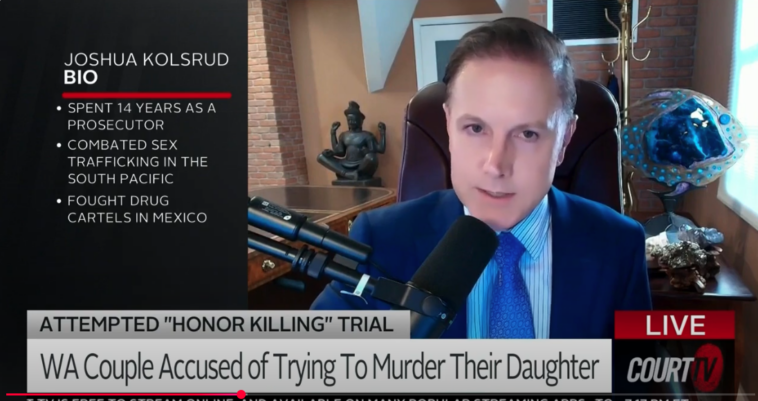
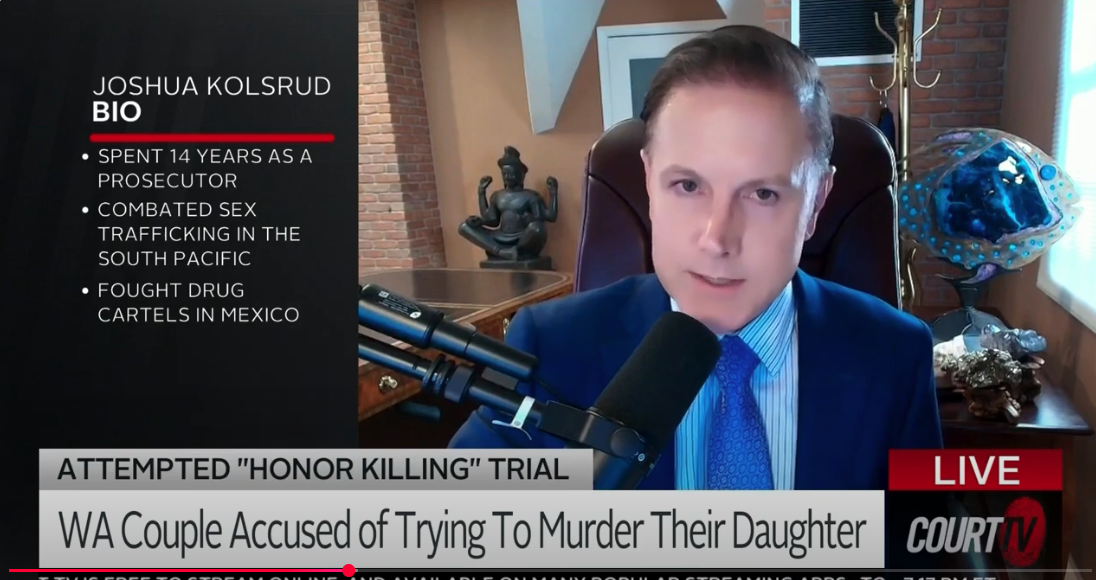
Defense attorney Josh Kolsrud recently shared his insights on the ongoing case involving Ihsan and Zahraa Ali, who are accused of attempting to kill their daughter. His analysis has shed light on a series of tangled issues and subtle parts within the trial that could have a tremendous impact on its outcome. As we poke around the fine details of the proceedings, several core themes emerge: the contradictions in witness testaments, the challenges that arise from multiple interpretations of the same chaotic scene, and the key legal questions that are set to determine whether a chokehold can be equated with attempted murder.
Examining the Confusing Bits of Evidence in the Trial
At the center of this trial lies a contentious issue: proving intent in a situation that appears to have arisen from a chaotic and overwhelming encounter. According to defense attorney Kolsrud, the prosecution has to deal with what can best be described as unforeseen twists and turns, where the evidence is scattered among conflicting eyewitness accounts and spontaneous statements.
The prosecution’s struggle is compounded by the judge’s ruling against introducing evidence related to “honor killing” or “arranged marriage” as motives. This decision forces all interpretations of the evidence to rely solely on what is directly observable in the courtroom. Consequently, the focus shifts even more to the confusing bits of evidence that have emerged from multiple witness testimonies, pushing both sides to steer through a maze of conflicting descriptions of the incident.
Confusing Bits of Evidence: Where Multiple Realities Collide
The events in question unfolded in a manner that left room for a myriad of interpretations. On one hand, the defense maintains that Mrs. Ali was present purely for support and that the daughter’s demeanor, as claimed by her, was “calm and collected.” On the other hand, eyewitnesses, including a bus driver and another local witness, painted a starkly different picture—one in which the daughter appeared terrified and in dire straits.
Key elements of the evidence include:
- Eyewitness accounts: Multiple testimonies indicate a state of fear and panic. These accounts suggest that the daughter was caught in a situation far more volatile than the defense narrative suggests.
- Video records: A crucial piece of evidence is the bus video obtained by witness Josh Wagner through a public records request. While the video may offer a visual account of the incident, questions have been raised regarding how its repeated viewings might have affected Wagner’s spontaneous recollection.
- Cross-examination strategies: Defense attorneys are expected to probe deep into the inconsistencies of these accounts, yet it appears that some key angles—especially questioning the potential confirmation bias in witness testimonies—may not have been fully explored.
Adding to these perplexing factors is the uncertainty regarding whether the actions during the incident were deliberate or the product of a spontaneous reaction amid escalating tensions. This is where the legal discourse becomes loaded with issues that are both tangled and critical in determining the trial’s final outcome.
Contradictions in Testimonies: Digging into the Fine Points of Witness Statements
One of the most compelling aspects of the case is the stark contrast between the defense narrative and the eyewitness accounts. As Kolsrud pointed out, the defense has presented a version of events that hinges on the daughter remaining composed despite the apparent danger. However, several eyewitnesses have given testimony that sharply contradicts this claim.
For instance, while the daughter allegedly described herself as being “calm and collected,” other witnesses—like the bus driver and an unnamed local—reported that she appeared terrified and overwhelmed. These contradictory descriptions introduce numerous little twists, making it difficult for the jury to piece together one consistent and compelling narrative. Some of these subtle details include:
- Differing perceptions of the daughter’s condition: The defense’s version of calmness directly conflicts with physical manifestations of distress mentioned by multiple witnesses.
- The location and conditions of the altercation: Descriptions of the scene vary, with some describing chaos and disorder, while the defense maintains a controlled environment for the events.
- The credibility of witnesses: Examining how each witness reached their conclusions is essential to understanding whether their recollections are influenced by external factors, such as repeated viewings of video evidence.
These discrepancies are not just trivial; they represent the key pieces of evidence on which the prosecution must build its case. The jury is thus left to determine whether the conflicting narratives are a result of genuine differences in perception or an orchestrated attempt to conceal the truth. It is in these moments of doubt that the fine points and hidden complexities of the case come to the fore.
Table: Summary of Key Witness Testimonies
| Witness | Description of the Daughter’s State | Potential Issues Raised |
|---|---|---|
| Defense Narrative | Calm, collected | Presents a picture at odds with observable tension |
| Bus Driver | Described her as in dire straits and terrified | Supports the view of an overwhelming crisis |
| Local Witness | Reported significant distress | Suggests the possibility of sustained fear and physical danger |
| Josh Wagner (Video Evidence) | Credibility questioned due to possible confirmation bias | Raises concerns about the reliability of video-aided recollection |
Evaluating the Credibility of Eyewitnesses: Sorting Out the Subtle Parts of Testimony
One of the most intriguing aspects of this case is the debate over eyewitness credibility, particularly in relation to Josh Wagner’s testimony. His decision to obtain the bus video through a public records request has cast a shadow over his account, introducing questions about how his repeated viewings might have influenced his memory of the event.
There is a reasonable argument to be made that the reliance on video evidence, while seemingly objective, can sometimes lead to what might be considered confirmation bias. When an individual watches a recording multiple times, their recollection may shift from an immediate, gut reaction to a more calculated recounting. This phenomenon is both tricky and nerve-racking for the defense, as it opens the door to alternative interpretations of what truly transpired during the altercation.
Here are some key points regarding the evaluation of eyewitness credibility:
- The impact of video evidence: Although video footage provides a visual record, the process of obtaining and repeatedly reviewing it can affect a witness’s natural memory, leading to altered testimonies.
- The role of cross-examination: Defense attorneys are tasked with finding the fine points in a witness’s story that could reveal inconsistencies. Highlighting potential confirmation bias is one of the strategies that can help the jury assess the true reliability of the testimony.
- The difference between spontaneous and rehearsed recollections: Witnesses who recount events immediately might provide a different account than those whose memories are shaped by viewing the evidence several times.
In practical terms, sorting out these subtle parts of testimony involves careful questioning, a critical evaluation of emotional and physical cues, and an overall review of the context in which each witness formed their memories. The legal process is burdened with the task of reconciling these little details to reach a verdict that is both just and factually correct.
Defense Strategies Under Scrutiny: Managing Your Way Through Overwhelming Evidence
At the heart of the defense’s plan is an argument centered on the chaotic nature of the incident. By emphasizing the melee and the array of conflicting stimuli that Mr. Ali was purportedly reacting to, the defense aims to portray a scenario in which his actions were less deliberate and more instinctive in response to multiple perceived threats.
This line of reasoning is intended to complicate the prosecution’s task of proving unequivocal intent to harm. However, as noted by Kolsrud, the effectiveness of this strategy is diminished when key witnesses—such as the bus driver and Wagner—describe Mr. Ali’s reaction as an overreaction that endangered his daughter. This raises the critical question: If a chokehold, executed in a context where fear and panic are evident, constitutes attempted murder, how should such actions be judged under the law?
Several considerations play a role in this debate:
- Multiple stimuli during the altercation: The defense’s notion that Mr. Ali was overwhelmed by conflicting factors is an attempt to present the incident as reactive rather than premeditated. However, if the reaction is deemed disproportionate, the challenge remains to distinguish between instinctive behavior and criminal intent.
- The legal definition of attempted murder: Central to the case is whether the act of placing his daughter in a chokehold can legally be defined as an attempt to kill, regardless of the surrounding chaos.
- The influence of external evidence: The prohibition on introducing evidence tied to the daughter’s alleged involvement in honor-based dynamics leaves the jury with limited tools. They are forced to rely solely on the physical aspects of the altercation and its immediate effects.
In essence, managing your way through this case requires both sides to take the wheel and carefully steer through a series of intricate and nerve-wracking legal arguments. The defense’s strategy, while designed to confuse and muddy the waters, must contend with solid eyewitness accounts that suggest the actions taken were not merely reactive, but dangerous.
Implications of Misinterpreted Evidence: Getting into the Nitty-Gritty of a High-Stakes Trial
The case’s layered complexity is further compounded by the implications of misinterpreted or selectively presented evidence. If the defense can successfully argue that the chaos of the situation played a significant role in shaping the behavior of the accused, the jury might be inclined to see the incident as a tragic outlier rather than a calculated act of violence.
However, as the evidence currently stands, there are several factors that contribute to the narrative against Mr. Ali’s actions:
- Consistent testimonies from multiple witnesses: When various accounts align in describing the daughter’s fear and distress, it challenges the claim that she was unaffected by the events unfolding around her.
- The physical implications of a chokehold: Medical and forensic evidence often indicates that the application of such physical force can have severe consequences. Jurors must assess this evidence with a clear understanding of both the immediate and potential long-term impacts.
- The context being stripped of additional motives: With judicial rulings barring the mention of “honor killing” or “arranged marriage,” the case rests on whether a simple act—albeit performed in a chaotic environment—can be legally categorized as attempted murder.
A table can help clarify how these issues weigh against one another:
| Evidence Category | Prosecution Interpretation | Defense Interpretation |
|---|---|---|
| Eyewitness Accounts | Paint a picture of terror and physical danger | Argue that stress and chaos led to misinterpretations |
| Video Evidence | Supports the claim of an overreaction culminating in a chokehold | Raises questions about confirmation bias impacting recollection |
| Physical Evidence | Highlights the potential harm caused by a chokehold | Minimizes the evidence as a byproduct of a chaotic situation |
The jury’s challenge, therefore, is to determine whether the overwhelming physical evidence coupled with consistent testimonies should be seen as proof of deliberate harm, or whether the confusion, induced by multiple factors during the incident, should result in a more lenient interpretation. This case encapsulates the nerve-racking task of differentiating between a reflexive reaction and a premeditated crime.
How Conflicting Narratives Affect Legal Outcomes: Sorting Out the Little Details
Within the context of this trial, conflicting narratives create a legal quagmire that is both intimidating and off-putting. When differing accounts of the same events reach the courtroom, jurors and legal professionals are forced to figure a path that not only looks at the surface details but also considers the subtle differences in recollection and interpretation.
Some of the critical points include:
- Emotional versus rational recollections: Witnesses often convey their memories influenced by their emotional state. In such cases, the little twists—like whether a witness was in a state of shock or calm—can significantly alter interpretations.
- Memory contamination: The process of recalling and recounting events can introduce cumulative errors. This makes it imperative for the court to differentiate between spontaneous memories and those that have been shaped by external influences.
- Legal definitions and thresholds: Determining the precise legal invocation of terms such as “attempted murder” requires establishing the defendant’s intent. The jury must carefully consider these subtle distinctions while ignoring irrelevant external factors.
The task of weighing these elements is akin to sorting out a puzzle where each piece represents a small but super important detail. Even the slightest error in judgment can lead to an outcome that may forever alter the lives of those involved. It is a responsibility that jurors must approach with a clear mind and an unwavering desire for justice.
Key Questions for the Jury: Taking a Closer Look at the Legal Process
A pivotal aspect of this case is the set of critical questions that the jury must resolve. At the heart of the deliberation is the evaluation of whether the use of a chokehold, within the specific context of the incident, should legally be equated to attempted murder. This determination rests on several core issues:
- The impact of physical restraint: How does the application of force, particularly a chokehold, affect the interpretation of criminal intent?
- The role of chaotic circumstances: Can a moment of overwhelming confusion be sufficient to excuse actions that, on their face, appear violent?
- The reliability of obtained evidence: In what ways might the process of securing and reviewing evidence, such as video footage, have altered eyewitness recollections?
These questions are not just abstract legal queries; they strike at the very core of how we define criminal responsibility in complex, emotionally charged situations. The jury’s ability to find its way through these tangled issues will ultimately decide whether justice is served.
Moreover, the prohibition on introducing factors like cultural or familial contexts—specifically the terms “honor killing” or “arranged marriage”—places an additional burden on the jury. They must determine the meaning and implications of the defendant’s actions without leaning on external stereotypes or preconceived notions. The legal standard is therefore reduced to a matter of physical evidence and consistently reported behavior during the incident.
Future Implications: The Impact of This Trial on Honor-Based Legal Cases
The outcome of this trial is poised to have broader ramifications, not only for those directly involved but also for similar cases in the future. As legal professionals and scholars watch this trial unfold, several long-term questions demand attention:
- Will the focus on physical evidence over contextual motives set a precedent? The judgment in this case could influence how future honor-based cases are prosecuted and defended.
- How will courts manage the challenge of confirming intent amid overwhelming chaos? The delicate balance between spontaneous reactions and deliberate acts remains a point of legal contention.
- What lessons can be learned regarding the use of video evidence? The potential pitfalls associated with confirmation bias may prompt reforms in the methods of evidence handling and witness examination.
This trial, filled with tangled issues and nerve-wracking moments, serves as a significant case study for legal practitioners. It highlights the pressing need to get around biased interpretations and encourages a more precise scrutiny of when and how particular actions—like a chokehold—should be legally classified as an indication of murderous intent.
Both the prosecution and the defense bear the heavy responsibility of clarifying the little details that have enormous implications. For those who study the law, this case illustrates the challenges inherent in presenting evidence in situations where every detail, however subtle, carries major weight.
Looking Back: A Recap of the Key Elements in the Case
Before we conclude, it is essential to summarize the critical elements that have been at the forefront of this controversial trial:
- Contradictory Eyewitness Testimonies: The conflicting statements about the daughter’s demeanor have made it difficult for the jury to form a coherent narrative.
- The Role of Video Evidence: Although video footage appears impartial, repeated viewings might have modified the witness’s memory, leading to potential confirmation bias.
- The Use of Physical Force: The question remains whether the chokehold applied can be legally equated with attempted murder given the surrounding chaotic circumstances.
- The Judicial Limits: With the judge blocking any reference to motives rooted in honor-based practices, the case is forced into a strict evaluation based on observable physical actions.
In the following table, we juxtapose the core aspects of the trial as understood from both the prosecution and defense viewpoints:
| Aspect | Prosecution’s View | Defense’s View |
|---|---|---|
| Witness Testimonies | Consistent, depicting terror and danger | Inconsistent narratives suggesting chaos and misinterpretation |
| Physical Evidence (Chokehold) | Indicative of an excessive, potentially murderous action | An instinctive reaction under a barrage of stressful stimuli |
| Video Evidence | Supports the notion of an overreaction that endangered the daughter | Raises questions due to the possibility of altered recollection from repeated viewings |
| Cultural Context | Not admissible; focus is solely on the physical act | A context that, if allowed, might have mitigated the perception of the actions |
Final Thoughts: The Weight of a Nerve-Racking Decision
As the trial continues, the stakes could not be higher. The layered nature of the case—with its twisted issues, overlapping testimonies, and a reliance on narrow interpretations of physical actions—ensures that every argument, every little twist in the evidence, will be scrutinized with intense focus.
For legal professionals and observers alike, this trial is a reminder of how the search for justice often involves finding your way through a maze of challenging and, at times, off-putting questions. The jury has the daunting task of not only assessing whether the act of putting a daughter in a chokehold constitutes attempted murder but also reconciling various contradictory accounts to render a verdict that is both fair and factual.
This case, with its tangled issues and nerve-racking evidentiary battles, is likely to set precedents in the handling of similar matters in the future. It underscores the importance of clear, unbiased, and methodical legal processes that are geared toward uncovering the truth amidst overwhelming chaos.
Ultimately, the legacy of this trial may well be defined by how effectively the legal system can work through the confusing bits and subtle details of the evidence. Whether the jury finds that the defendant’s actions were a calculated attack or an overreaction born of a chaotic moment will shape not only the lives of those involved but also the broader interpretation of criminal intent in high-stakes cases.
The legal community and the public must now remain vigilant and engaged, as the outcome of this trial will shed light on the challenges inherent in cases where the evidence is riddled with tension and where every small detail has the potential to tip the scales of justice.
In Conclusion: A Call for Clarity and Justice in a Tangled Judicial Maze
In closing, it is essential that we recognize the multiple layers of complexity—and indeed the confusing bits—that define this trial. With conflicting narratives and a barrage of evidence, the courtroom has become an arena for both legal experts and laypersons to reflect upon the fine points of justice.
As this case progresses, the onus is on the legal system to get around any bias, manage the nerve-wracking testimonies, and ultimately deliver a verdict that stands up to careful scrutiny. Whether through cross-examination, thorough analysis of physical evidence, or a keen eye on the subtle parts of every statement, the search for justice must remain transparent and meticulous.
For those watching from the sidelines, this trial is a stark reminder that justice is not always straightforward. Instead, it is a process filled with twists and turns—where every witness’s statement, each piece of evidence, and every little detail collectively determine the path forward.
In the end, taking a closer look at the myriad complexities of this case might not only illuminate the specific incident at hand but also pave the way for more refined and balanced legal proceedings in future cases. Legal professionals, jurors, and the community must work together to ensure that decisions are reached based on clear, unbiased assessments of every bearable piece of evidence.
With all eyes on this high-stakes trial, the legal community is reminded that the pursuit of justice demands unwavering attention to the fine details, even when those details seem tangled or overwhelming. It is through this process that we uphold the principle that every individual—no matter how complicated the case—deserves a fair trial, guided by clarity, integrity, and a steadfast commitment to the truth.
Read more about this topic at https://kolsrudlawoffices.com/honor-killing-trial-lacey-washington/
Related articles you might like
Unraveling the Truth: Why Witnesses Lie and How to …
A Day in the Life of a Witness Expert: Unraveling Truths …